中文
中文Executive Summary
The International Energy Agency’s (IEA) May Oil Market Report has sent a chill through the energy sector. With a projected demand contraction of 420,000 barrels per day (bpd) for 2026, the narrative is being dominated by high prices and geopolitical volatility. However, a deeper dive suggests this isn’t just a cyclical dip. We are witnessing a fundamental “de-coupling” where the aviation and chemical industries—once the bedrock of demand growth—are being forced into a premature, high-friction evolution.
Article Outline
-
The Context: The convergence of geopolitical supply shocks and the “Price Ceiling” effect.
-
The Hard Pivot: Analyzing the disproportionate impact on Aviation and Petrochemicals.
-
The Contrarian View: Why “Demand Destruction” might actually be “Efficiency Acceleration.”
-
Geopolitics vs. Geology: The shift from resource scarcity to supply-chain fragility.
-
Conclusion: The 2026 outlook as a blueprint for the “Lean Energy” era.
The Great Recalibration: Beyond the IEA’s Red Ink
For decades, the energy market operated on a relatively simple pulse: when the global economy breathed, oil demand expanded. But the IEA’s May 2026 report marks a jarring arrhythmia. A contraction of 420,000 bpd in an era of supposed post-crisis recovery isn’t just a statistic; it is a signal that the global economy’s tolerance for triple-digit oil prices has finally hit a hard ceiling.
1. The Fragility of the “Just-in-Time” Supply Chain
The IEA rightly points to geopolitical conflicts as the primary catalyst for the supply crunch. However, the “資深研究员” (Senior Researcher) perspective suggests a more nuanced reality. We aren’t just lacking barrels; we are lacking predictable barrels. The current supply deficit is a byproduct of “Weaponized Energy,” where the flow of oil is no longer governed by the laws of extraction, but by the whims of diplomatic brinkmanship. This volatility has baked a “permanent risk premium” into the price, making long-term planning for heavy consumers nearly impossible.
2. Aviation and Chemicals: The Canary in the Coal Mine
The IEA highlights that aviation and chemicals are bearing the brunt of this contraction. This is significant because these sectors were traditionally considered “inelastic.”
-
Aviation: For the first time, we see a “demand wall.” High fuel surcharges are finally outpacing the consumer’s desire for travel. We are entering an era of “Selective Mobility,” where business travel is being permanently replaced by high-fidelity digital alternatives, not out of environmental altruism, but out of sheer fiscal necessity.
-
Petrochemicals: This sector is the hidden engine of modern life. From medical plastics to EV components, everything requires a feedstock derived from oil. The contraction here suggests a “Circular Pivot.” Manufacturers are being forced to accelerate the adoption of recycled polymers and bio-based feedstocks years ahead of schedule.
3. A Contrarian Take: The Efficiency “Silver Lining”
While many analysts view “demand destruction” as a harbinger of recession, a more sophisticated view sees it as forced efficiency. High prices are the most effective (if painful) policy tool for decarbonization.
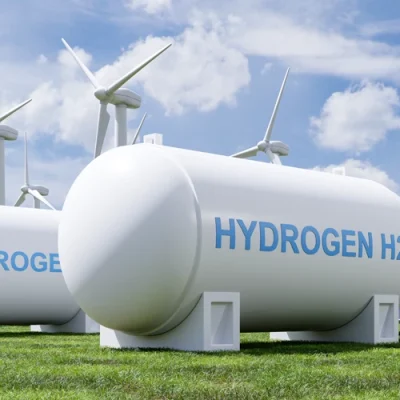
When oil is cheap, innovation is a luxury. When oil is a luxury, innovation becomes a survival mechanism. The 420,000 bpd “loss” represents a massive migration toward optimization. We are seeing a surge in aerodynamic retrofitting in shipping, a radical shift toward “Green Hydrogen” in chemical processing, and a renewed obsession with lightweighting in manufacturing. The oil that isn’t being burned in 2026 is effectively being replaced by “Intelligence”—the software and engineering that allow us to do more with less.
4. The New Energy Map: From Flow to Stock
The 2026 report subtly hints at a change in the global power dynamic. In previous decades, the focus was on who controlled the flow (pipelines and tankers). Today, the focus is shifting to who controls the stock and the technology.
The contraction in demand in developed economies is being partially offset by strategic stockpiling in emerging markets. We are moving from a “Global Commons” energy market to a “Fortress Energy” model. Countries are no longer just buying oil for consumption; they are buying it for insurance. This “Insurance Premium” is what will keep prices high even as actual consumption shrinks.
5. Conclusion: The Dawn of “Lean Energy”
The IEA’s May report shouldn’t be read as a eulogy for the oil market, but as a birth certificate for the “Lean Energy” era. The contraction of 2026 is the market’s way of shedding its “unproductive fat.”
For investors and industry leaders, the takeaway is clear: the era of betting on volume is over. The future belongs to those who bet on value-per-barrel. We are no longer in a race to find more oil; we are in a race to find more ways to live without it. The 420,000 bpd decline is not a sign of a dying world, but of a world that is finally learning to respect the true cost of its fuel.
Core Insights for Research
-
Theme: The structural shift from volume-driven growth to efficiency-driven resilience.
-
Geopolitical Trigger: Supply-side fragility resulting from localized conflicts becoming a global tax on consumption.
-
Economic Impact: A “Sectoral Divorce” where traditional heavy-users (Aviation/Chemicals) are decoupling from oil-based growth.
-
Final Word: High prices are not the problem; they are the catalyst for a long-overdue industrial metamorphosis.