中文
中文Executive Summary
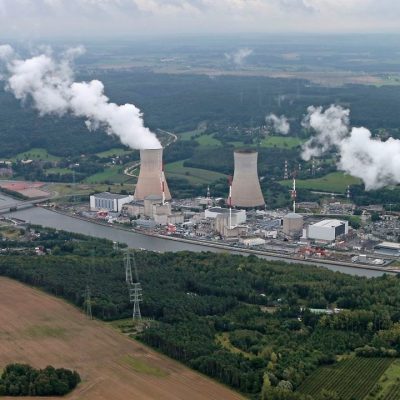
The geopolitical tremors of 2026 have achieved what decades of policy debate could not: a decisive pivot toward nuclear energy in Southeast Asia. Driven by the “史上最大” (Largest Ever) Energy Crisis and the volatility of fossil fuel markets, Thailand, Indonesia, and Malaysia are fast-tracking nuclear roadmaps. With Indonesia and Japan formalizing a landmark deal for West Kalimantan and Thailand integrating Small Modular Reactors (SMRs) into its 2026-2050 Power Plan, the region is no longer just “considering” the atom—it is preparing to split it.
Article Outline
-
The Geopolitical Catalyst: Why the 2026 Middle East supply disruptions ended Southeast Asia’s “Natural Gas Romance.”
-
Indonesia’s West Kalimantan Gambit: Analyzing the Indonesia-Japan nuclear pact and the move toward SMRs.
-
Thailand’s PDP 2026: How “Net Zero 2050” forced nuclear energy into the national baseline.
-
The Regulatory Race: Malaysia’s “Thirteenth Plan” and the creation of the regional nuclear watchdog (NEPIO).
-
Conclusion: The shift from “Resource Dependency” to “Technological Sovereignty.”
The Tropical Atom: A Strategic Pivot Born of Necessity
For years, the prospect of nuclear power in Southeast Asia was a ghost—haunted by the memory of Fukushima and suppressed by the availability of cheap regional gas. But as of May 2026, that ghost has taken on a very solid, industrial form. The IEA’s warning of a demand contraction and the World Economic Forum’s declaration of a global energy “Great Reset” have left ASEAN nations with a stark choice: innovate or face economic stagnation.
1. The End of the “Gas Bridge”
Thailand and Indonesia were once the poster children for the “Natural Gas Bridge.” However, the 2026 conflict in the Middle East—specifically disruptions to the Strait of Hormuz—has turned that bridge into a liability. With gas prices decoupling from economic reality, the region’s leaders have realized that “energy security” cannot be imported via a tanker. Nuclear energy, once a “taboo” topic, has suddenly become the most pragmatic solution for stable, low-carbon baseload power.
2. Indonesia: The Japanese Partnership in West Kalimantan
The most significant development is the March 2026 Memorandum of Cooperation between Indonesia and Japan. This is a surgical move. By targeting West Kalimantan, Indonesia is bypassing the traditional “Large Reactor” model in favor of Small Modular Reactors (SMRs).
Collaborating with Japanese engineering giants and US-based technology like NuScale, Indonesia is building a “Distributed Nuclear” model. This allows for power generation in remote provinces without the need for massive, centralized grid overhauls. The Nuclear Energy Program Implementing Organisation (NEPIO), led by President Prabowo, signifies that this is no longer a research project—it is a presidential priority.
3. Thailand: Rewriting the Energy DNA
Thailand’s 2026-2050 Power Development Plan (PDP) is arguably the most aggressive in the nation’s history. It officially integrates nuclear power into the national mix to meet the “NDC 3.0” climate pledges.
The rationale is purely economic. Thailand’s burgeoning data center industry and AI infrastructure demand a massive, unwavering supply of “Clean Electrons.” Solar and wind alone cannot provide the 24/7 reliability these digital hubs require. By aiming for at least two SMR units by the early 2030s, Thailand is signaling to global tech giants that its future energy supply is “crisis-proof.”
4. Malaysia: The Late-Mover Advantage
Malaysia has joined the fray via its Thirteenth Malaysia Plan (2026-2030). Under the leadership of Deputy PM Fadillah Yusof, Malaysia is focusing on the “Legal and Regulatory Fortress.” They are learning from the regulatory hurdles of the West to build a modern, transparent framework from day one. Malaysia’s entry completes a “Nuclear Triangle” in Southeast Asia, creating a massive new market for global technology providers from Korea, China, and Japan.
5. Conclusion: From Quarry to Core
The Southeast Asian nuclear surge of 2026 is not an environmentalist’s dream—it is a realist’s defense. The region is transitioning from being a “Resource Quarry” for global powers to becoming a hub of Technological Sovereignty.
The 2026 energy crisis has proven that true independence is found in the atom. As Indonesia breaks ground in West Kalimantan and Thailand finalizes its SMR sites, the message is clear: The future of the “Asian Tiger” economies will be powered by the most dense, reliable energy source known to man. The “Tropical Atom” is no longer a possibility; it is the new baseline for regional survival.
Core Content of the Event
-
The Agreement: Indonesia and Japan’s nuclear pact (March 2026) focusing on West Kalimantan and SMR technology.
-
The Policy: Thailand’s PDP 2026-2050 and Malaysia’s RMK-13 officially adopting nuclear energy into national strategy.
-
The Driver: Geopolitical volatility and the failure of the “Gas Bridge” to provide price stability.
-
Unique Insight: The shift toward SMRs (Small Modular Reactors) is allowing Southeast Asian nations to “leapfrog” traditional large-scale nuclear hurdles, integrating power into fragmented geography.